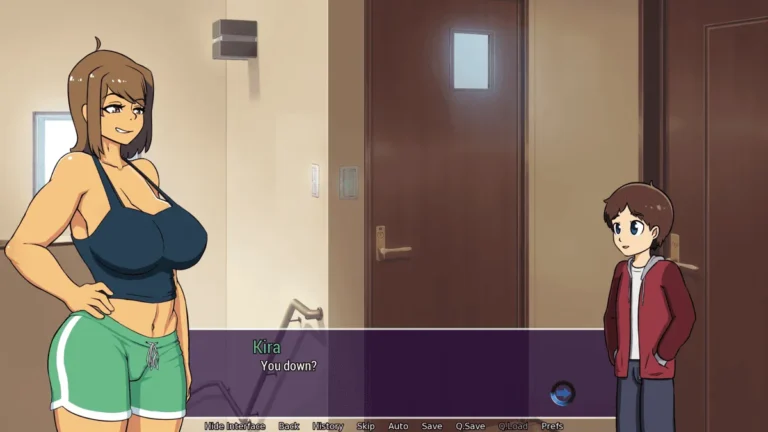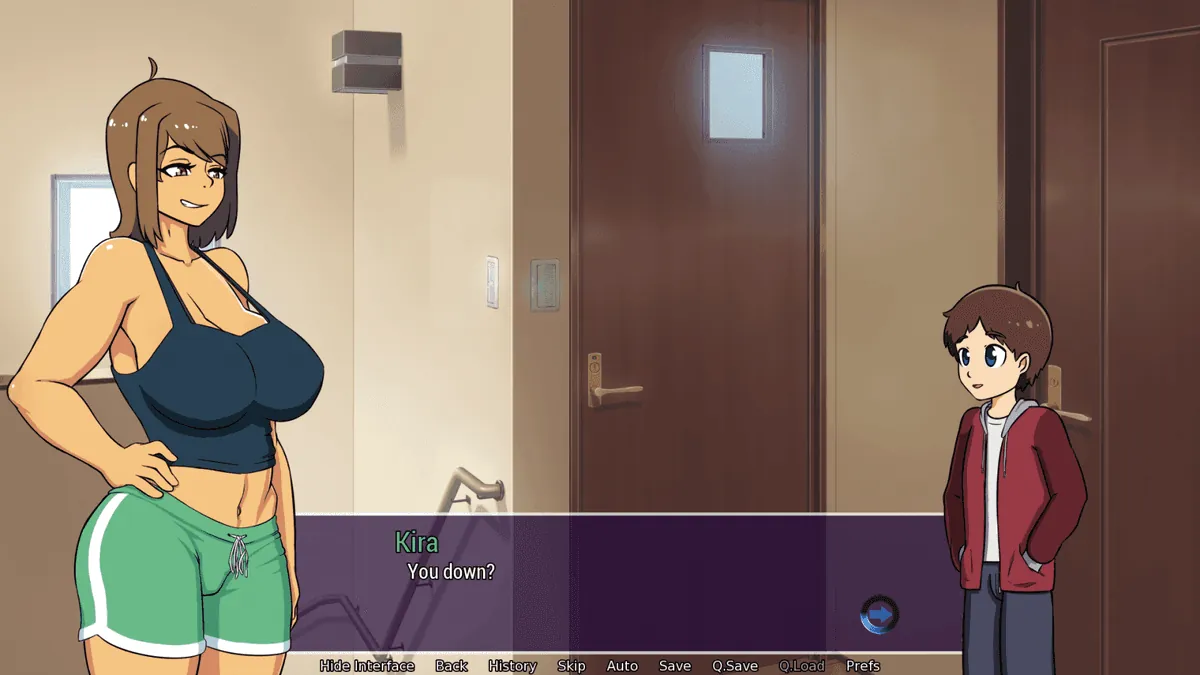
Insexual Awakening
Play Insexual Awakening
Insexual Awakening Screenshots
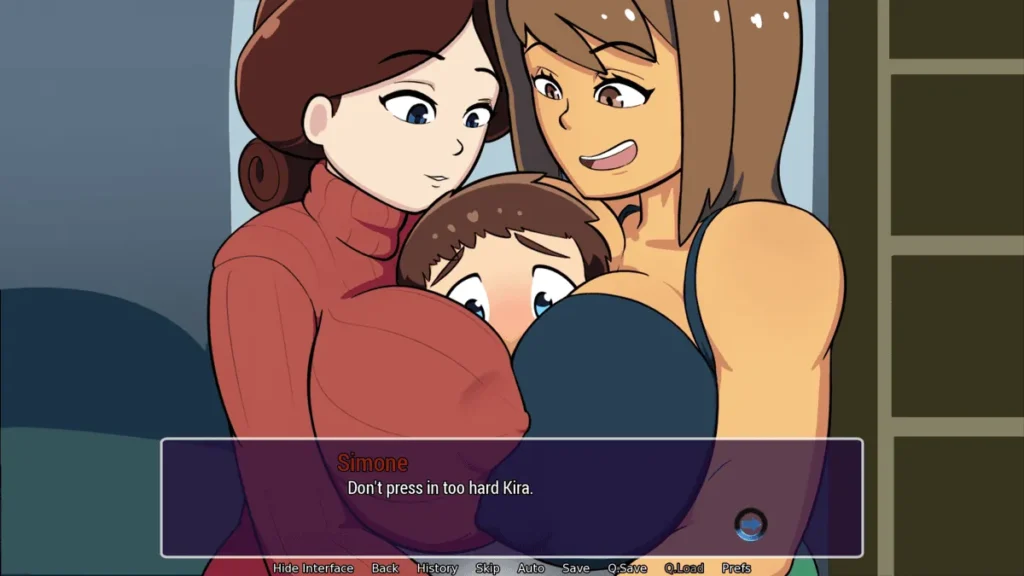


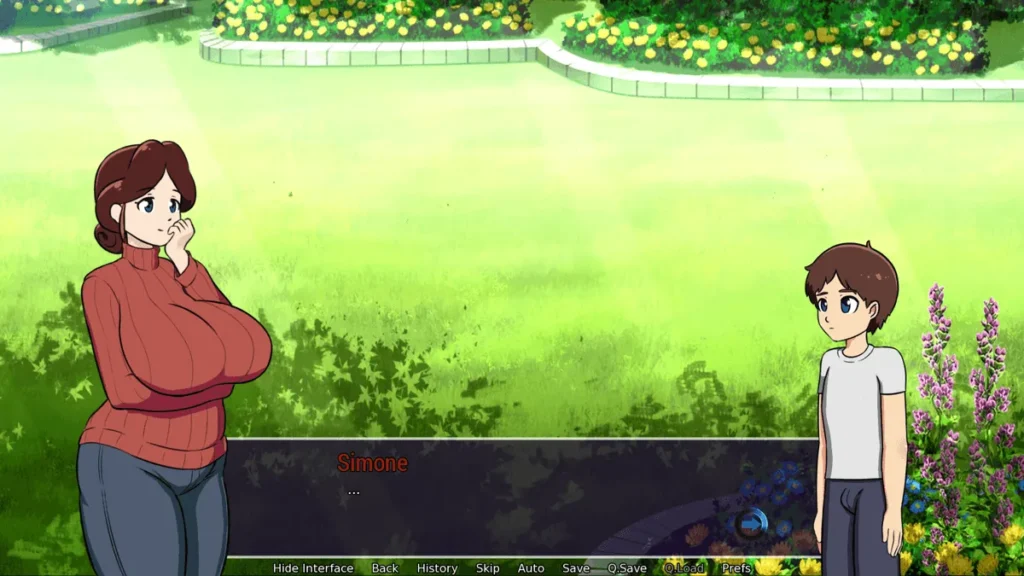
Insexual Awakening review
Explore the visual novel experience that blends storytelling with mature themes
Insexual Awakening stands out as a distinctive visual novel-style game that goes beyond typical gaming experiences by weaving together compelling narratives with themes of personal growth and self-discovery. This interactive adventure invites players into a world where character interactions drive the story forward, creating meaningful connections that shape the overall gameplay experience. Whether you’re a seasoned visual novel enthusiast or new to the genre, understanding what makes this game unique can help you decide if it’s the right fit for your gaming preferences. This comprehensive guide explores everything you need to know about the game, from its core mechanics to what sets it apart in the visual novel landscape.
Understanding Insexual Awakening: Game Overview & Core Mechanics
Ever picked up a visual novel, expecting a deep, emotional journey, only to find yourself clicking through endless text with the impact of a damp firecracker? 🙄 I’ve been there. You make a “choice,” but it feels cosmetic, like picking the color of a wallpaper that gets covered by furniture. The story chugs along its predetermined track, and you’re just a passenger holding the map upside down.
That’s exactly why Insexual Awakening stopped me in my tracks. This isn’t just another title in your library; it’s a deliberate, thoughtful experiment in interactive storytelling. As an Insexual Awakening visual novel, it takes the core promise of the genre—player agency—and makes it the absolute bedrock of the experience. Forget passive reading; here, you are the author of your own discomfort, growth, and connection. It’s a game that lives and breathes through its visual novel game mechanics, making every click feel weighted with potential consequence. Let’s dive in and uncover what makes this journey so uniquely compelling.
What Makes This Visual Novel Different
So, what sets this self-discovery visual novel apart in a sea of static narratives? It’s all about intentionality and maturity, and I don’t just mean its thematic content. Most visual novels present a story; Insexual Awakening presents a situation—a complex, emotionally charged scenario—and hands you the tools to navigate it. The difference is in the philosophy.
First, its identity as an Insexual Awakening visual novel is rooted in a raw, often uncomfortable, authenticity. The game doesn’t use its mature themes as mere decoration or shallow titillation. Instead, they are integral to the personal growth game themes it explores. The narrative forces you to confront internal biases, make difficult ethical calls, and sit with the emotional fallout of your decisions. I remember one early playthrough where I chose what I thought was the “kind” option, only to watch it enable a character’s self-destructive pattern. The game didn’t judge me with a “Bad End” screen; it just showed me the nuanced, real-world consequence of my well-intentioned but misguided choice. That hurt more than any game over. 😅
Secondly, the visual novel game mechanics are designed for reflection, not just reaction. The pacing is deliberate. You’ll have moments of tense dialogue followed by quiet periods where you, as the protagonist, simply process what just happened. This space is crucial. It turns the game from a series of events into a genuine internal journey. You’re not just watching a character grow; you’re actively participating in the messy, non-linear process of their—and arguably your own—understanding.
Finally, the artistic presentation supports this perfectly. The art style leans into a evocative, sometimes somber aesthetic that matches the narrative’s emotional weight. Character expressions are nuanced, with subtle shifts that speak volumes, making the character interaction gameplay deeply immersive. The music and sound design aren’t just background noise; they’re emotional cues that amplify tension, relief, or melancholy. This cohesive package ensures that every element of this Insexual Awakening visual novel is working in concert to deliver its singular, impactful experience.
Gameplay Mechanics and Player Choices
At its heart, the genius of this Insexual Awakening visual novel lies in how it makes you feel powerful and profoundly responsible at the same time. The visual novel game mechanics are elegantly simple on the surface—you read, you click, you choose—but devilishly complex beneath. This is a masterclass in how branching narrative choices should function.
The core loop revolves around meaningful interaction. During dialogue, you’re not just picking from pre-written lines of charming banter. You’re selecting attitudes, approaches, and values. Will you be confrontational or conciliatory? Will you pry into a painful memory or offer silent support? These aren’t “good vs. evil” sliders; they are shades of human response that shape how characters perceive you and, more importantly, how they perceive themselves in relation to you. This is the essence of its relationship building mechanics. Every interaction is a brick in a foundation you are constantly laying, and the integrity of that foundation determines what can be built upon it later.
The structure actively demands and rewards multiple playthroughs. A typical single path might take several hours, but seeing just one is like reading only the first chapter of a choose-your-own-adventure book. The game’s branching narrative choices create a truly divergent story tree. I once replayed a section three times, making different key decisions, and ended up in three completely different narrative territories by the mid-point—one of reconciliation, one of bitter isolation, and one of complicated, tense alliance. The game remembers everything, and seemingly small choices can ripple outwards in dramatic ways.
To give you a clearer picture of how these systems work together, let’s break down the core components:
| Gameplay Feature | How It Works | Impact on Narrative |
|---|---|---|
| Dialogue & Attitude Selection | Choosing conversational tones (Open, Guarded, Direct, Empathetic) instead of specific lines. | Defines the protagonist’s personality and unlocks unique response paths from characters based on established trust. |
| Relationship Affinity System | An invisible, multi-faceted meter tracking trust, respect, intimacy, and conflict with each character. | High affinity in one area (e.g., trust) opens narrative branches closed to others (e.g., conflict-based paths). |
| Pivotal Story Choices | Major decisions often presented with a timer, forcing instinctive rather than calculated responses. | Creates permanent forks in the main plot, locking or unlocking entire character arcs and endings. |
| Memory & Reflection Moments | Gameplay pauses for internal monologue, allowing players to solidify their character’s perspective on past events. | These moments can subtly alter the context of future dialogue options, personalizing the protagonist’s voice. |
This framework makes the character interaction gameplay intensely strategic in an emotional sense. You’re not managing resources; you’re managing vulnerability, honesty, and boundaries. It’s a powerful reminder that in stories about people, the mechanics are the psychology.
Character Development and Relationship Building
If the narrative is the spine of Insexual Awakening, then the characters are its nervous system—complex, sensitive, and carrying signals of immense consequence. This is where the game truly shines as a self-discovery visual novel. You don’t just learn about the characters; you learn through them, and your relationship building mechanics are the primary tool for that exploration.
Each character is designed not as a collection of tropes, but as an individual with a history, traumas, desires, and defensive mechanisms. Your role isn’t to “fix” them, but to engage with them. The character interaction gameplay is a constant dance of push and pull. Sometimes, offering support strengthens a bond; other times, it requires you to challenge someone, to hold up a mirror to their behavior, which can be risky but is often necessary for genuine growth. These themes are central to the personal growth game themes for all involved—you and the digital companions.
Let me give you a concrete example from my own playthrough that illustrates the weight of branching narrative choices. Early on, a character named Kael is struggling with a failure. You have a pivotal choice:
1. Option A (The Push): “You need to stop feeling sorry for yourself and face this.”
2. Option B (The Comfort): “It’s okay to be upset. Everyone fails sometimes.”
3. Option C (The Distraction): “Forget about it for now. Let’s go get a drink.”
Pro Tip: There is rarely a universally “correct” choice. The best option depends entirely on the relationship you’ve built up to that point and the character growth you want to encourage—or endure.
In one playthrough, I consistently chose comforting options. When this moment came, I picked Option B. Kael accepted the comfort, but our relationship solidified into one where he increasingly leaned on my character for validation, avoiding the root of his problem. It created a close, but somewhat dependent, bond.
In another, I had been more direct. Choosing Option A here was a consistent extension of that dynamic. Kael reacted with initial anger, but later came back, having processed the harsh truth. It unlocked a series of scenes about resilience and self-accountability that were completely absent from my first playthrough. Our relationship was more strained but ultimately more grounded in mutual respect.
Choosing Option C, the distraction, led down a path of avoidance. It was fun and light for a while, but when the underlying issue inevitably resurfaced, it was catastrophic for his arc and our connection. This is the brilliance of the relationship building mechanics—they aren’t about accumulating “points,” but about steering the very nature of a human connection, with all its potential for beauty or disaster.
This system ensures that the journey of this Insexual Awakening visual novel is deeply personal. Your protagonist becomes a reflection of your choices, and the characters become mirrors showing the consequences of those choices. By engaging authentically with its character interaction gameplay, you don’t just witness a story about personal growth; you conduct the orchestra of it, for better or worse. It’s this fearless commitment to player-driven emotional consequence that makes Insexual Awakening not just a game you play, but an experience you live and learn from. 🎭
Insexual Awakening represents a compelling entry in the visual novel genre, offering players a rich narrative experience centered on personal growth and meaningful character interactions. The game’s strength lies in its ability to blend storytelling with player agency, allowing each playthrough to feel unique based on the choices made throughout the experience. From its engaging character development systems to its exploration of mature themes with narrative purpose, the game creates an immersive world that resonates with players seeking depth beyond typical gaming experiences. Whether you’re drawn to the game for its narrative complexity, character relationships, or the freedom to shape your own story, understanding its mechanics and themes helps you fully appreciate what makes it distinctive. If you’re considering diving into Insexual Awakening, take time to explore different character paths and embrace the choices that feel authentic to your playstyle. The game rewards thoughtful engagement with its narrative, making it a worthwhile experience for visual novel enthusiasts and players seeking meaningful interactive storytelling.